
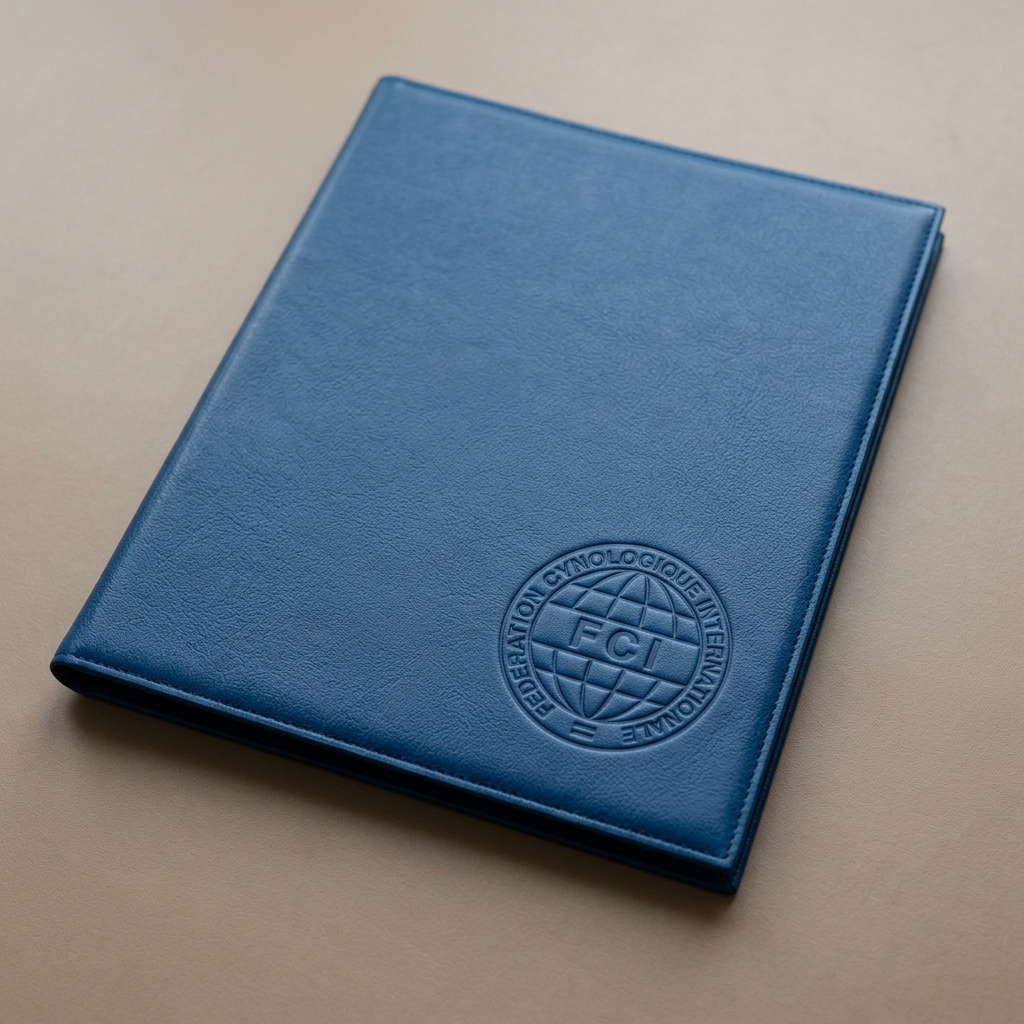
“I don’t want to breed or show, I just want a lovely family dog.” Breeders and vets hear this sentence all the time. It sounds sensible, but it misses the point.
Because papers are not about trophies, dog shows or a fancy family tree on the wall. They show you what happened before your puppy: Were the parents screened for hereditary diseases? Who are the grandparents? Did anyone make sure that dogs too closely related were not mated? Was the litter raised according to clear rules, or just because puppies sell well?
Without papers, these questions remain open. Sometimes that works out. Sometimes it only shows years later what was “saved”: hip problems, eye diseases or a dog whose temperament doesn’t fit your everyday life at all. Then come vet visits, training sessions and many sleepless nights.
A puppy with a pedigree from a breeder who breeds within an FCI-affiliated breed club is therefore not the luxury option. It is the option where you know what you are getting before you fall in love.
In this article you will learn what the FCI, ÖKV, VDH or SKG are about, why the pedigree is your most important document when buying a puppy, and why choosing the right breed matters more than the cutest photo.
A dog for the next 12 to 15 years
A puppy is a decision for many years. It moves house with you, stays with you through job changes and new family members and, at best, becomes part of your everyday life. That makes one question all the more important before you fall in love with a photo: Where does this dog come from, and what do I know about it?
This is exactly the biggest advantage of a pedigree dog from a kennel affiliated with an FCI organisation: you don’t just get a puppy. You also get knowledge about its origin, its parents and what you can expect from it.
What is the FCI?
The Fédération Cynologique Internationale (FCI) is the world umbrella organisation for dog breeding. It was founded in 1911, is based in Belgium and unites national kennel clubs from almost 100 countries. The FCI recognises around 350 dog breeds. For each of them there is a binding breed standard: a description of the breed’s appearance, size, temperament and original purpose.
The FCI does not breed dogs itself. It sets the framework, and its members make sure it is followed: the national umbrella bodies.
The role of the national umbrella bodies
Every member country has a national body, such as the ÖKV in Austria, the VDH in Germany or the SKG in Switzerland. These umbrella bodies:
- keep the stud books and issue the pedigree, the official record of descent over several generations,
- recognise the breed clubs that look after the individual breeds,
- set general breeding rules, for example the minimum age of the female, intervals between litters or requirements for raising the puppies,
- organise shows, tests and training for breeders, judges and breed wardens.
Under the umbrella of the national body work the breed clubs. They know “their” breed best and add breed-specific requirements to the general rules: health screenings such as X-rays for hip or elbow dysplasia, eye examinations or genetic tests for known hereditary diseases. Many clubs also send a breed warden who visits litters and accompanies the rearing.
The pedigree: more than a piece of paper
Some people think of the pedigree as a formality for show fans. Yet for you as a puppy buyer it is pretty useful:
- You know the ancestry. Parents, grandparents and further ancestors are documented.
- Health results can be traced. Many clubs publish the screening results of their breeding dogs or note them in the papers.
- Inbreeding can be managed. With complete pedigrees, breeders and clubs can plan matings that preserve genetic diversity.
- The breeding can be traced back. Anyone who breeds within a club follows its rules and can be contacted if there are problems.
A puppy “with papers” from just any association is not the same thing. Make sure the pedigree comes from an organisation affiliated with the FCI. If the FCI logo is shown and the pedigree was issued by the national umbrella body, you are on the right track.
Why there are different breeds and why that matters to you
Dog breeds are not just a question of looks. Each breed developed over generations for specific tasks: herding, hunting, guarding, retrieving, pulling sleds or simply as a companion. This history still shapes their behaviour today.
- A Border Collie wants to work and think. A walk around the block is not enough for it.
- A Pug or a Cavalier King Charles Spaniel is above all a companion dog and wants to be with its people.
- A livestock guardian dog such as the Kangal is independent and watchful – wonderful in the right environment, but not a dog for every city flat.
- A Labrador is friendly, food-obsessed and loves water. That can delight a family – or overwhelm it.
The big advantage of a pedigree dog is predictability. Size, coat care, exercise needs and typical temperament are much easier to assess than with a dog of unknown origin. This way you can consciously choose a breed that fits your life, instead of adapting afterwards to a dog that actually needs something completely different.
Breeds are also cultural heritage. Many old breeds would no longer exist today without people who have carefully preserved them over decades. Buying from a club breeder helps keep this diversity alive.
The advantages at a glance
If you buy from a breeder who is a member of an FCI-affiliated breed club, you can usually expect the following:
- Documented ancestry through a pedigree from the national umbrella body.
- Breeding dogs screened according to the club’s requirements, for example for breed-typical hereditary diseases.
- Rules for rearing, for example a minimum age when puppies go to their new homes, vaccination, deworming and identification by microchip.
- A breeder who knows their breed and tells you honestly whether it suits you – even if the answer is “probably not”.
- Support after the purchase. Good breeders stay available, often for the dog’s whole life.
- A club in the background you can turn to with questions.
Important, and to be honest: there is no guarantee of a dog that stays healthy for life, not even with a pedigree. But the likelihood of getting a well-socialised puppy that was raised healthy is much higher when breeding follows transparent rules rather than demand.
Beware of puppy trade: how to spot dubious offers
Unfortunately, many sellers want to make quick money with cute photos. Be alert if:
- you are not allowed to see the mother,
- the puppy is to be handed over in a car park or “conveniently at your front door”,
- several breeds are constantly available at the same time,
- the puppy is younger than eight weeks,
- there is no pedigree, or the papers come from an association that does not belong to the FCI,
- the seller has no questions for you.
A good breeder wants to know how you live, how much time you have and why you are interested in this breed. So if you get “interrogated”, that’s a good sign.
How to find the right breeder
- Find the right breed. Think honestly about how much time, space and exercise you can offer.
- Get information from the breed club. Most clubs have puppy lists and are happy to give advice.
- Visit breeders in person, ideally several, before a litter arrives.
- Ask about papers and screenings of the parents and have them shown to you.
- Take your time. Waiting times are normal with good breeders and a sign that puppies are not produced “for stock”.
Conclusion
A pedigree dog from a breeder who breeds within an FCI-affiliated club is not a matter of prestige. It is about transparency, predictability and responsibility: for the dog, for the breed and for you. If you know where your puppy comes from and what makes it who it is, you lay the foundation for many happy years together.
Not sure yet which breed suits you? Take our breed finder on Pepi.dog and discover breeders and current litters of the breeds that fit your life.
Hinweis: Pepi.dog ist ein neutrales Verzeichnis und prüft oder zertifiziert keine Züchter. Eine angezeigte Vereinszugehörigkeit bedeutet Mitgliedschaft im jeweiligen Verein.